Umeda vs Namba: Where to Stay in Osaka, by the Actual Numbers (2026)
This post may contain affiliate links. If you book or buy through them, we may earn a commission at no extra cost to you.
Every Osaka guide tells you the same thing: Umeda is convenient, Namba is fun. That’s true, but it doesn’t tell you how many minutes or yen separate the two — and that’s usually what actually decides a booking. Below are the verified transit times and fares between Kansai Airport and both districts, the Midosuji subway line that connects them, and what each area is actually good for. Figures are current as of September 2026.
The Short Answer
If you’re arriving late, catching an early Shinkansen, or prioritizing a business-hotel-style stay near the station, pick Umeda (also called Kita, or “Osaka Station” on JR maps). If you want to walk to Dotonbori’s food scene at midnight, are traveling with a group that wants nightlife within stumbling distance, or are watching your budget, pick Namba. The two are seven to nine minutes apart by subway, so neither choice locks you out of the other side of town.
Umeda vs. Namba at a Glance
| Umeda (Kita) | Namba / Dotonbori (Minami) | |
|---|---|---|
| Character | Business district: department stores, office towers, JR/Shinkansen hub | Tourist and nightlife district: Dotonbori canal, street food, Shinsaibashi shopping arcade |
| Hotel mix | Large chain and business hotels, more high-rise options | Dense mix of budget guesthouses, mid-range hotels, and boutique properties |
| Best for | Shinkansen travelers, business trips, early departures, quieter nights | First-timers, food-focused trips, groups, late-night arrivals by taxi |
| Main downside | Fewer late-night dining options within walking distance | Loud at night in the core blocks around the canal |
Kansai Airport to Your Hotel: The Real Numbers
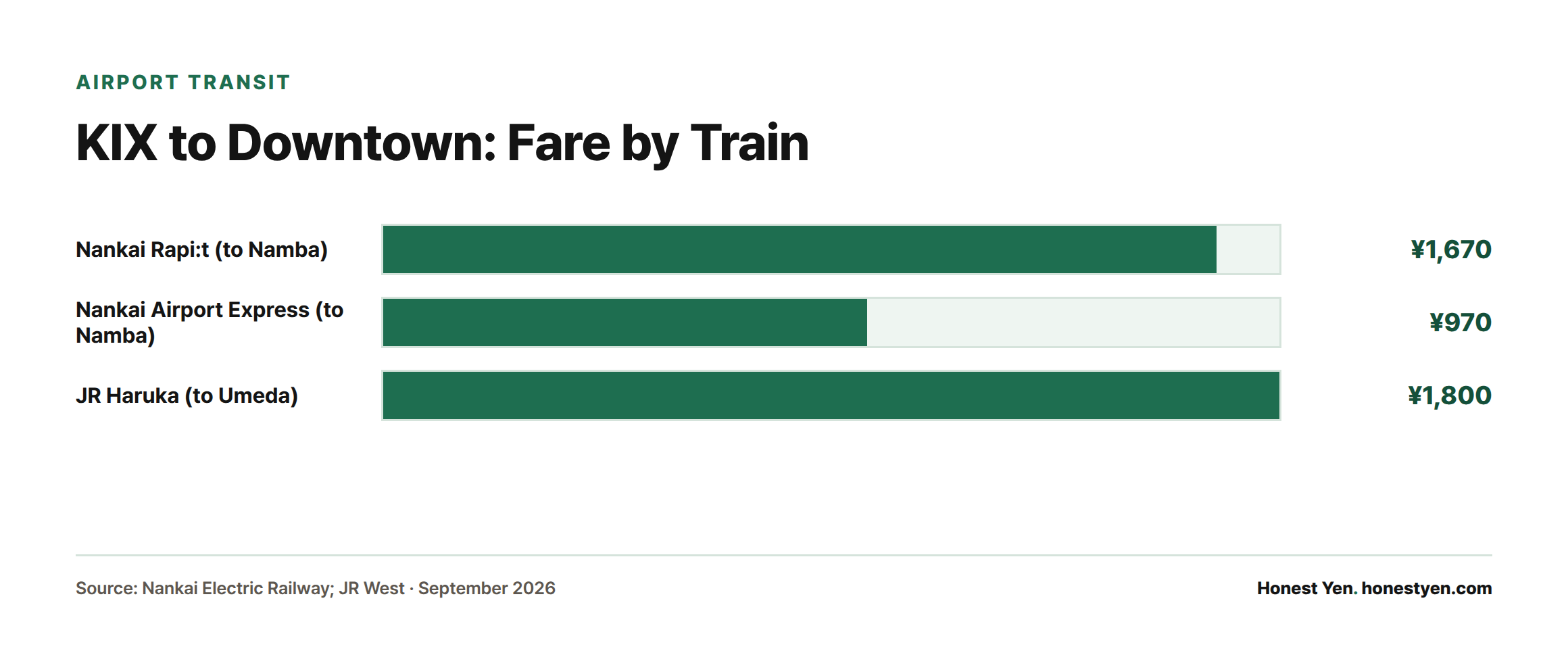
This is where most comparisons stay vague. Here are the actual figures for each option, based on the operators’ own fare and timetable pages.
| Route | Train | Time | Fare (adult, one-way) |
|---|---|---|---|
| Kansai Airport → Namba | Nankai Rapi:t (reserved limited express) | as fast as 34 min [1] | ¥1,670 regular seat (¥970 base fare + ¥700 express charge) [1] |
| Kansai Airport → Namba | Nankai Airport Express (no reservation) | about 44 min | ¥970 [1] |
| Kansai Airport → Osaka/Umeda | JR Haruka (reserved limited express) | 47 min [2] | ¥1,800 [2] |
The 47-minute Haruka time is relatively new: JR West only started stopping the Haruka at Osaka Station in March 2023, when the underground Umekita platform opened. Before that, reaching Umeda from the airport meant riding to Shin-Osaka or Tennoji and transferring, which routinely took over an hour. That single change is why “Umeda is a hassle from the airport” is now outdated advice — the two districts are within about 13 minutes of each other from Kansai Airport, not the 30-plus minutes older articles imply. If you’re deciding which IC card to load for the ride in, our Suica vs ICOCA comparison covers which card works better if you’re staying in the Kansai region for the whole trip.
Crossing Town: Namba and Umeda Are 7 Minutes Apart
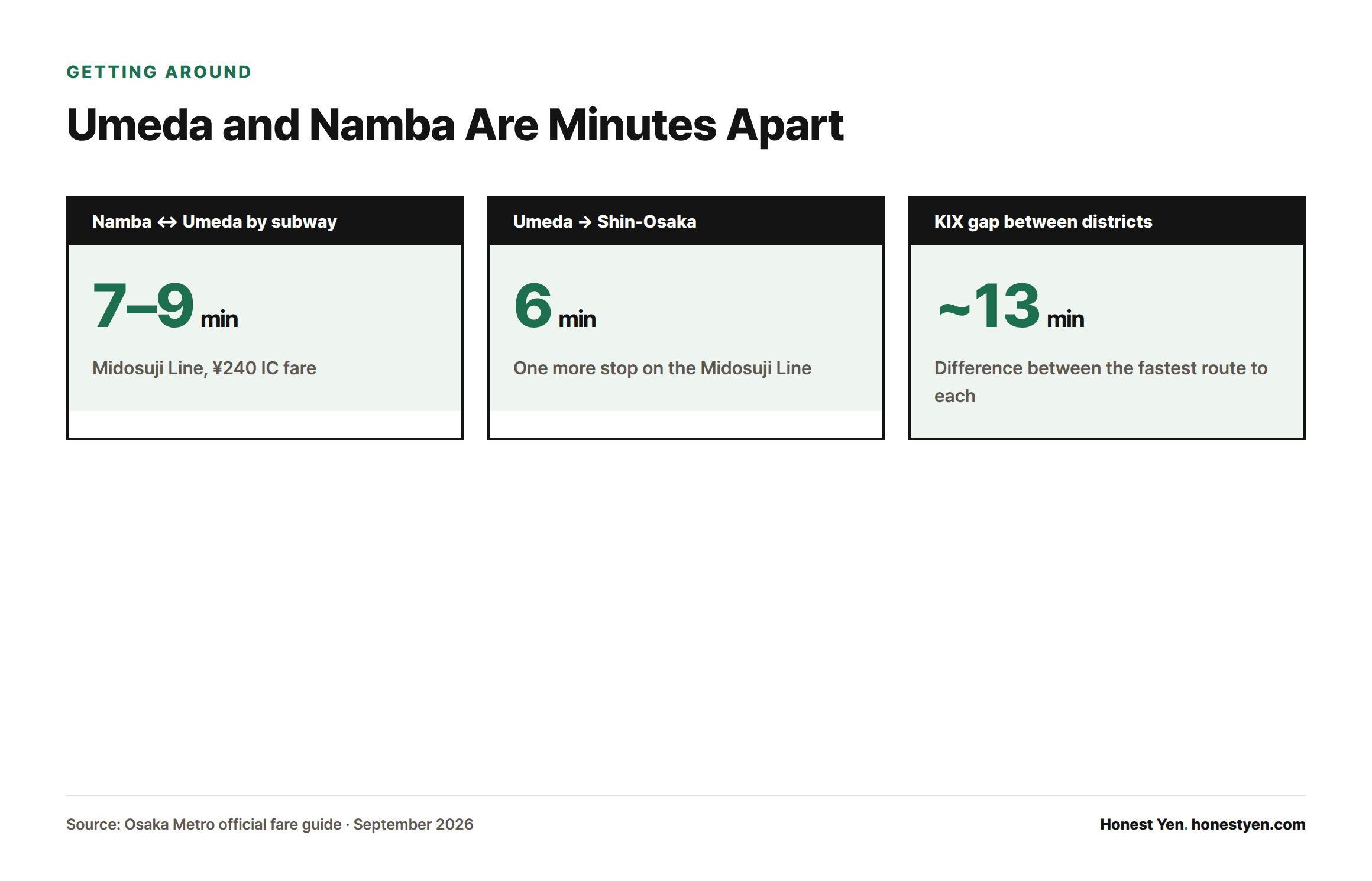
Whichever district you pick, the other one is never far. Osaka Metro’s Midosuji Line runs directly between Namba and Umeda stations in about seven to nine minutes for ¥240 on an IC card [3]. Continue one more stop north from Umeda and you’re at Shin-Osaka, the Shinkansen station, in about six minutes [3]. In practice this means the “wrong” choice barely costs you anything: staying in Namba and wanting an Umeda department store, or staying in Umeda and wanting Dotonbori at night, is a sub-10-minute subway ride either way.
What You’ll Actually Pay
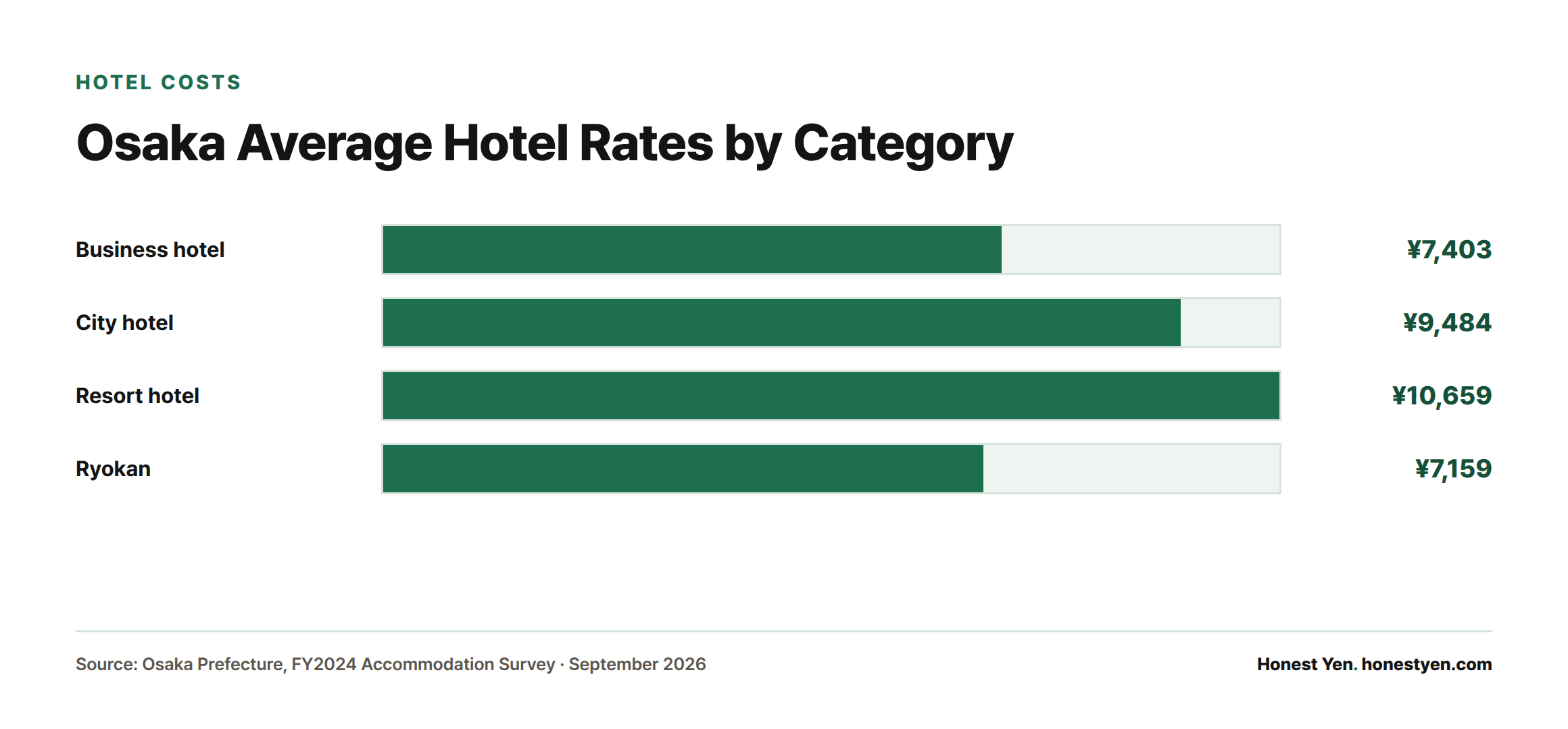
Osaka doesn’t publish official average room rates broken down by neighborhood, so treat any area-specific price claim (including on other sites) with some skepticism. What Osaka Prefecture does publish, in its fiscal 2024 accommodation survey, is average per-person unit prices by hotel category across the prefecture: business hotels averaged ¥7,403 a night, city hotels ¥9,484, resort hotels ¥10,659, and ryokan ¥7,159 [4]. Umeda’s inventory leans toward the business- and city-hotel categories in that table; Namba and Dotonbori have a denser mix of budget guesthouses and boutique hotels alongside mid-range chains, which is why searches there often surface a wider spread from very cheap to very expensive on the same street. The practical takeaway: compare specific hotels on the dates you’re traveling rather than assuming one district is categorically cheaper — inbound demand around Dotonbori can push short-term rates above what the category averages above suggest.
Day Trips to Kyoto, Kobe, and Nara
Umeda has the edge for day-trip logistics. Osaka Station and Shin-Osaka sit on the JR Kyoto Line and Tokaido Shinkansen, so Kyoto, Kobe, and Nara are direct or near-direct rides without backtracking through the city center first. Namba still works well for Nara (the Kintetsu Nara Line runs straight from Kintetsu-Namba) and for Kobe via the Hanshin Line, but a Kyoto day trip from Namba typically means one extra connection to reach a JR or Hankyu line. If Kyoto is a big part of your itinerary, our Kyoto bus and subway pass guide is worth reading before you decide which one-day ticket to buy once you’re there.
Which Area Fits Your Trip
- First visit to Osaka: Namba, for walkable access to Dotonbori, Kuromon Market, and Shinsaibashi without relying on the subway for your first outing.
- Repeat visitor or Shinkansen-heavy itinerary: Umeda, for the direct Shin-Osaka connection and calmer evenings.
- Couples: Either works; Umeda’s Umeda Sky Building and rooftop bars suit a quieter evening, Namba suits a food-crawl night out.
- Families: Namba’s density means less walking between dinner, convenience stores, and the hotel after a long day.
- Solo travelers: Namba, for the volume of casual eating counters and later train/subway frequency back to the hotel.
The Third Option: Shinsaibashi and Honmachi
Shinsaibashi is not a separate transit hub — it’s the shopping arcade that sits directly between Namba and Dotonbori, one Midosuji Line stop north of Namba Station. Booking a “Shinsaibashi” hotel usually means a short, flat walk to everything Namba offers, sometimes with slightly less noise at night. Honmachi, one stop further north, is a business district similar in character to Umeda but closer to both Namba and Umeda geographically — a reasonable compromise if you want a midpoint base, though it has far fewer tourist-facing restaurants within walking distance than either main district.
FAQ
- Is Umeda or Namba better for a first trip to Osaka? Namba, mainly for walkability to the sights most first-timers prioritize. See our guide to eating in Dotonbori without the wait if that’s your plan.
- How is Shinsaibashi different from Namba? It’s not a different transit zone — it’s the arcade neighborhood directly north of Namba Station, one subway stop away. Hotels there are effectively Namba-area hotels.
- How long does it take from Kansai Airport to Umeda? 47 minutes on the JR Haruka limited express, which now stops directly at Osaka Station [2].
- Which area is better if I’m visiting Kyoto, Kobe, or Nara? Umeda, because Osaka Station and Shin-Osaka sit directly on the JR lines to all three; Namba still works well specifically for Nara via the Kintetsu line.
- Which area has cheaper hotels? There’s no official area-by-area price index, but Namba and Dotonbori’s mix of budget guesthouses gives it a wider low-end range; compare specific properties for your dates rather than assuming either area is uniformly cheaper.
- Which is better for a late arrival or early departure? Umeda, if you’re on an early Shinkansen or an early Haruka to the airport, since you skip the transfer. For a late-night arrival by taxi or late train, Namba’s longer operating hours for restaurants and konbini make settling in easier.