Sapporo Winter Packing List: What You Actually Need Below -10°C (2026 Guide)
This post may contain affiliate links. If you book or buy through them, we may earn a commission at no extra cost to you.
The Sapporo Winter Checklist at a Glance
Sapporo winter cold is dry-air, ice-underfoot, wind-off-the-sea cold, running roughly December through March. This guide uses official JMA climate normals and airline/retailer policies checked as of August 2026.
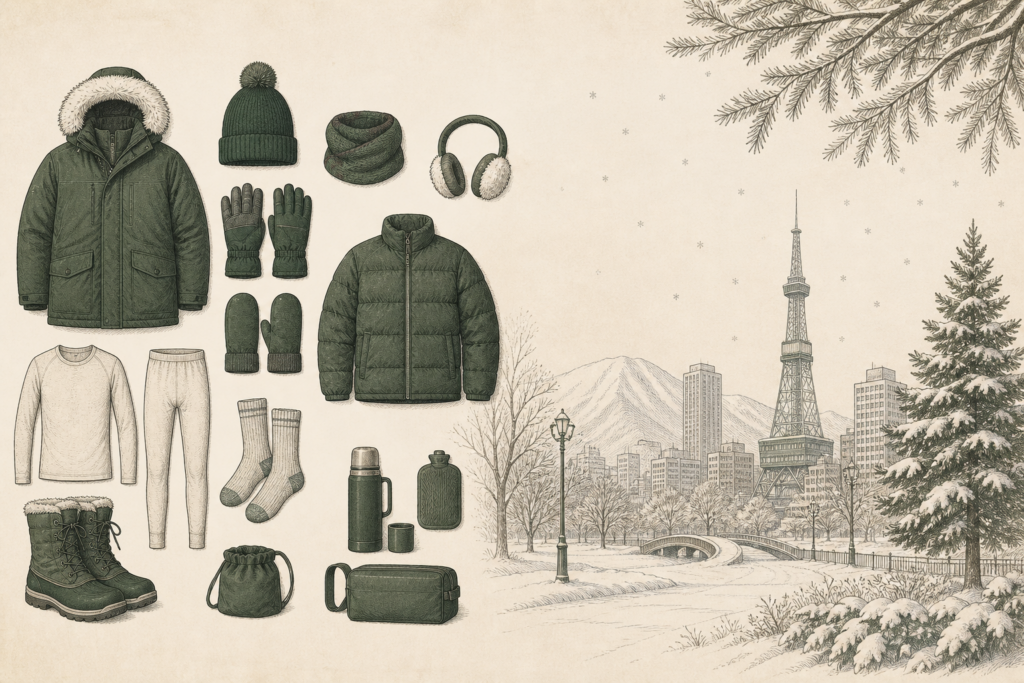
- Base layer: thermal top and leggings, two sets for a week
- Mid layer: fleece or light down you can shed indoors
- Outer layer: windproof, ideally waterproof, coat for sub-zero wind chill
- Waterproof winter boots with a grooved sole, plus slip-on ice grips
- Wool or fleece-lined gloves, an ear-covering hat, a neck warmer, lip balm
- A charged power bank and a data plan sorted before landing
- Travel insurance with cashless medical coverage, arranged before departure
Sapporo Winter Weather: Which Month Is Actually the Coldest?
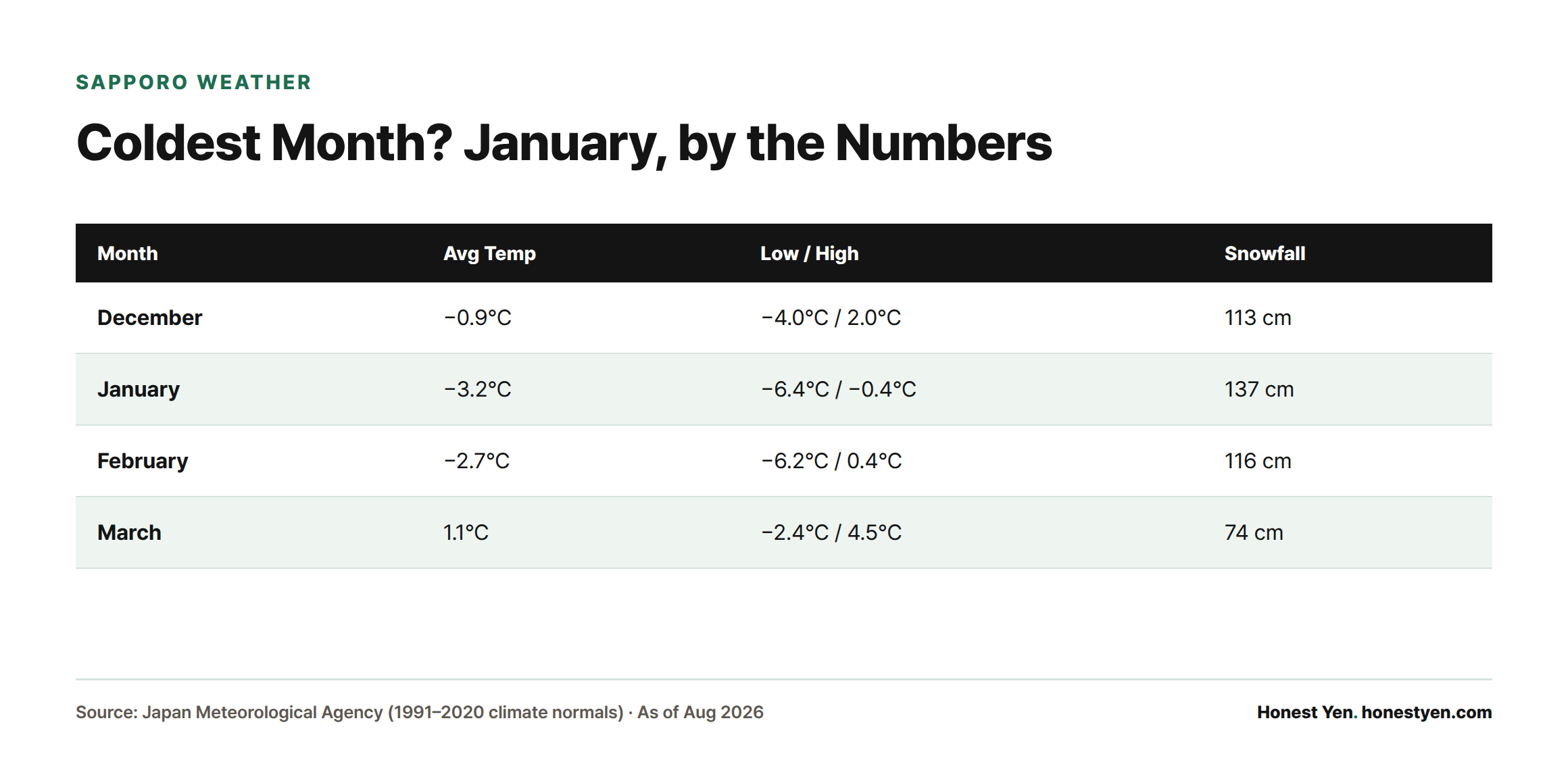
Per JMA’s 1991–2020 climate normals for Sapporo, January is the coldest month, averaging −3.2°C with a daily low of −6.4°C; nights well below −10°C are common on clear evenings.[1]
| Month | Avg. temp | Avg. low / high | Snowfall total |
|---|---|---|---|
| December | −0.9°C | −4.0°C / 2.0°C | 113 cm |
| January | −3.2°C | −6.4°C / −0.4°C | 137 cm |
| February | −2.7°C | −6.2°C / 0.4°C | 116 cm |
| March | 1.1°C | −2.4°C / 4.5°C | 74 cm |
These are official JMA normals for the Sapporo observation point.[1] December already brings the single heaviest daily snowfalls in this data set, so an early-season trip can face the same walking and transit disruption as peak winter.
The Layering Formula: Base, Mid, Outer
Hokkaido’s indoor heating is strong enough that locals really do wear T-shirts inside — which is exactly why layering, not one big coat, is the right approach. One thermal top-and-bottom set covers a single day; pack two sets for a week-long trip. Fleece-lined base layers add bulk and warmth for standing outside for long stretches, such as festival crowds; thinner thermal-knit layers move better when you’re crossing between heated indoor spaces often. The mid layer is what you add or shed at that boundary; the outer layer should be windproof at minimum, ideally waterproof.
Footwear and Anti-Slip Ice Grips
Sneakers and flat-soled “winter-look” boots are genuinely dangerous on Sapporo’s polished-ice sidewalks. Get boots with a deep-lugged or rubber-spike sole, and treat slip-on ice grips as safety gear, not a novelty. Skip packing them from home: Daiso sells an adhesive anti-slip sole sticker for ¥110[6], and stretch-on ice grip bands are a standard seasonal item at Sapporo convenience stores and drugstores in winter. Buying locally also avoids carrying metal-studded gear through outbound airport security.
Cold-Weather Accessories and Electronics
An ear-covering hat, gloves, a neck warmer, and lip balm matter most — Hokkaido winter air is dry as well as cold. Daiso lists gloves from ¥110 and neck warmers at ¥110–330[7], cheap enough to buy on arrival rather than pack. Bring sunglasses in advance for snow glare near ski areas. Cold shortens battery life fast, so carry a power bank. Sort an eSIM, physical SIM, or pocket Wi-Fi before landing rather than at the airport counter — the trade-offs are covered in this SIM vs eSIM vs pocket Wi-Fi comparison. For getting around, Kitaca (JR Hokkaido’s IC card) covers Sapporo’s subway, buses, streetcars, and the New Chitose Airport train, and is interoperable with Suica and eight other nationwide IC cards.[4]
Packing Strategy: Carry-On vs. Backpack
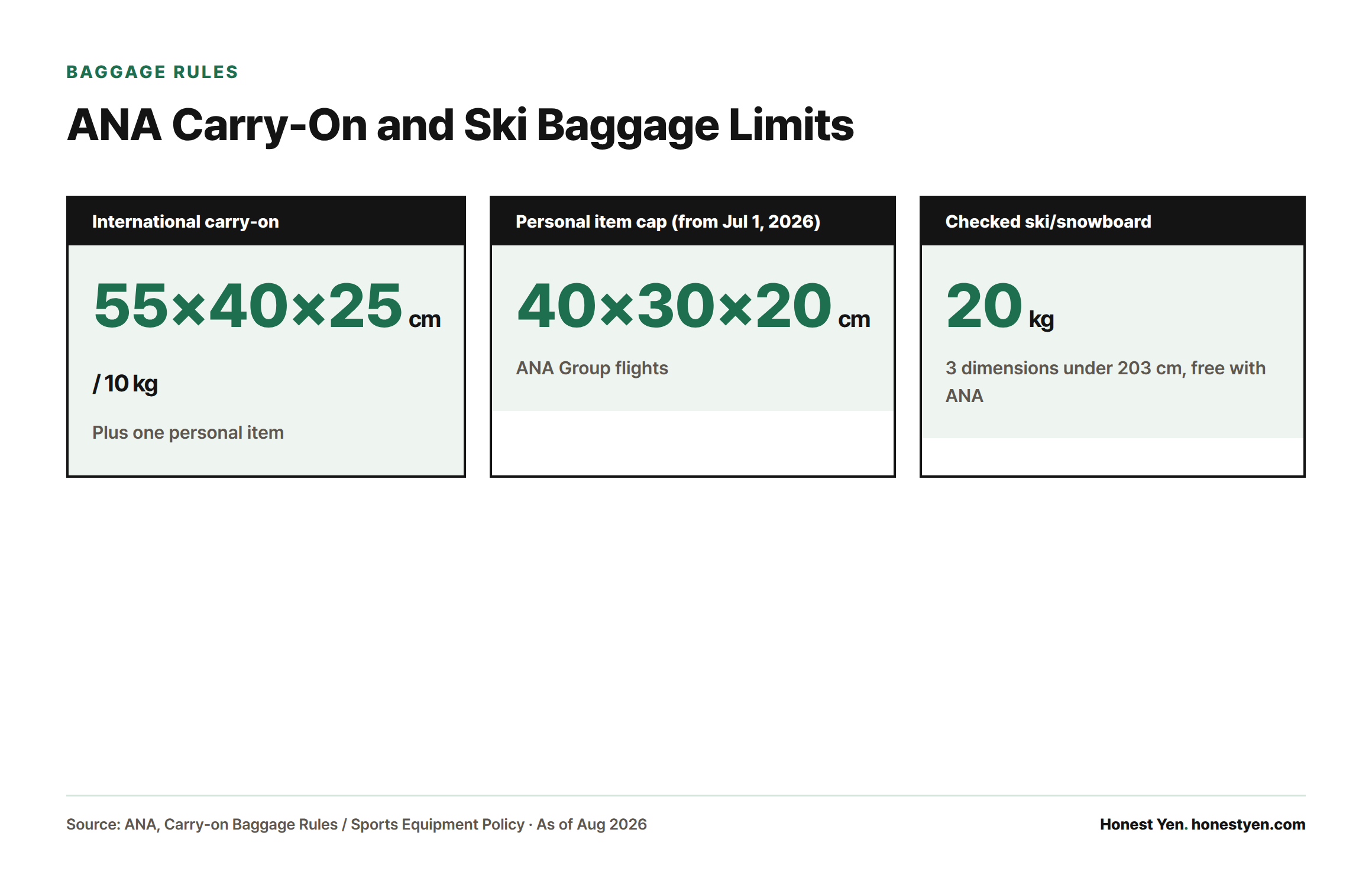
A rolling suitcase is fine indoors but a liability on icy sidewalks; a backpack, or a suitcase paired with a daypack, works better once you’re outside. ANA’s international carry-on allowance is one bag up to 55×40×25 cm and 10 kg, plus one personal item — from July 1, 2026, ANA Group flights cap personal items at 40×30×20 cm, though the main carry-on size is unchanged.[2] Checking skis or a snowboard for a Niseko or Rusutsu add-on is free with ANA inside a proper case, provided it fits the standard 20 kg domestic allowance and the three dimensions sum under 203 cm; confirm with the airline first on smaller regional aircraft.[3]
Safety, Health, and Travel Insurance
Pack prescriptions in original packaging, plus heavier moisturizer and lip balm than you’d normally travel with — heated interiors against cold, dry air outside is a fast combination for cracked skin. Traveling with kids or older relatives, prioritize anti-slip footwear for them first; falls on ice are the most common way a Hokkaido trip goes wrong. JNTO notes that roughly one in twenty travelers gets sick or injured abroad, and recommends confirming your policy covers cashless treatment before you go — unpaid medical bills have affected re-entry eligibility for some visitors since 2021.[5] Arrange insurance through your home provider or a travel card before flying; Japan’s Tourism Agency also runs a portal for buying coverage after arrival, linked from JNTO’s travel insurance page.[5]
What to Buy Before You Leave vs. in Sapporo
| Bring from home | Buy in Sapporo |
|---|---|
| Thermal base layers | Ice grips, anti-slip stickers |
| Prescriptions, specialty toiletries | Gloves, neck warmers, hand warmers |
| Travel insurance, arranged in advance | Extra layers if you underpacked |
| Sunglasses for snow glare | SIM/eSIM top-ups, IC card |
| Windproof/waterproof outer coat | Lip balm, moisturizer, hand warmers |
Money logistics are the same as anywhere else in Japan — if you haven’t picked a travel card yet, this comparison of Wise, Revolut, Starling, and Schwab covers ATM fees worth sorting out before you’re standing outside in −10°C wind.
Sources
- Japan Meteorological Agency, Sapporo climate normals (1991–2020)
- ANA, Carry-on Baggage Size and Rules — International Flights
- ANA, Bicycles and Sports Equipment — Domestic Flights
- JR Hokkaido, Kitaca IC Card — Usable Area and Service
- Japan National Tourism Organization, Travel Insurance in Japan
- DAISO Online Store, Shoe Sole Anti-Slip Sticker
- DAISO Online Store, Gloves collection