Kawaramachi vs. Kyoto Station: Where to Stay in Kyoto (2026 Guide)
This post may contain affiliate links. If you book or buy through them, we may earn a commission at no extra cost to you.
Kyoto’s two most-booked hotel bases pull in opposite directions. Kawaramachi puts you inside the old entertainment district, walking distance from Gion and the Kamo River. Kyoto Station puts you on top of the transit hub that connects the airport, the Shinkansen, and most of the city’s bus routes. As of September 2026, here is how the two actually compare on time, money, and who each one suits.
Quick comparison
| Kawaramachi | Kyoto Station area | |
|---|---|---|
| Vibe | Riverside dining, bars, Nishiki Market, Gion nearby | Transit hub, department stores, chain hotels |
| Airport access | Transfer required | Direct (train or bus) |
| Sightseeing on foot | Gion, Pontocho, Kamo River, Nishiki Market | Toji Temple; everything else needs a bus/train |
| Best for | Couples, first-time visitors prioritizing atmosphere, night owls | Heavy luggage, early Shinkansen departures, families with tight connections |
| Late-night options | Izakaya and bars open past midnight | Mostly convenience stores after 11pm |
Kawaramachi: transit, sights, and atmosphere
Kawaramachi refers to the strip along Kawaramachi-dori and Shijo-dori in central Kyoto, anchored by Kyoto-Kawaramachi Station (Hankyu Railway) and Gion-Shijo Station (Keihan Railway). It sits between the Kamo River and Nishiki Market, and it’s a genuine walking base: Gion and Yasaka Shrine are about 10-15 minutes on foot, Pontocho’s alley of restaurants runs parallel to the river, and Nishiki Market is a five-minute walk. For sightseeing on foot without touching a bus or subway, this is the more convenient of the two areas — most of central Kyoto’s famous walking routes (Gion, Pontocho, Nishiki) start closer to here than to the station. The tradeoff is that neither JR nor the airport lines stop here, so every airport or Shinkansen trip involves a transfer.
Kyoto Station: airport, Shinkansen, and convenience
Kyoto Station is the only point in the city where the Tokaido Shinkansen, JR lines to Osaka and Nara, the Kyoto City Subway, and the main city bus terminal all meet. Hotels here range from mid-range chains a few minutes’ walk away to Hotel Granvia Kyoto, built directly into the station building, which also holds a department store and a bus terminal with routes to Kiyomizu-dera, Kinkaku-ji, and most other major temples — useful background if you haven’t settled on a bus or subway pass yet, since the Kyoto Bus & Subway Pass Guide breaks down which one-day ticket is worth it from here. One genuine walking-distance sight exists nearby: Toji Temple, about 15 minutes on foot. Everything else — Gion, Kinkaku-ji, Fushimi Inari, Arashiyama — requires a bus, subway, or train from the station.
Real travel times and fares
From Kansai Airport, the JR limited express Haruka runs directly into Kyoto Station without a transfer, taking roughly 75-90 minutes depending on the specific train[1]. Visitors on a short-term visa can buy the discounted Haruka one-way ticket for ¥2,200 (child ¥1,100) instead of the standard fare[2]; there is also the Kansai Airport Limousine Bus, which runs directly to Kyoto Station’s Hachijo exit for ¥2,800 in about 85-90 minutes[3]. Neither the train nor the limousine bus serves Kawaramachi directly — travelers heading there transfer at Kyoto Station onto a city bus or the Karasuma subway line, or ride into Kyoto Station first and cross over.
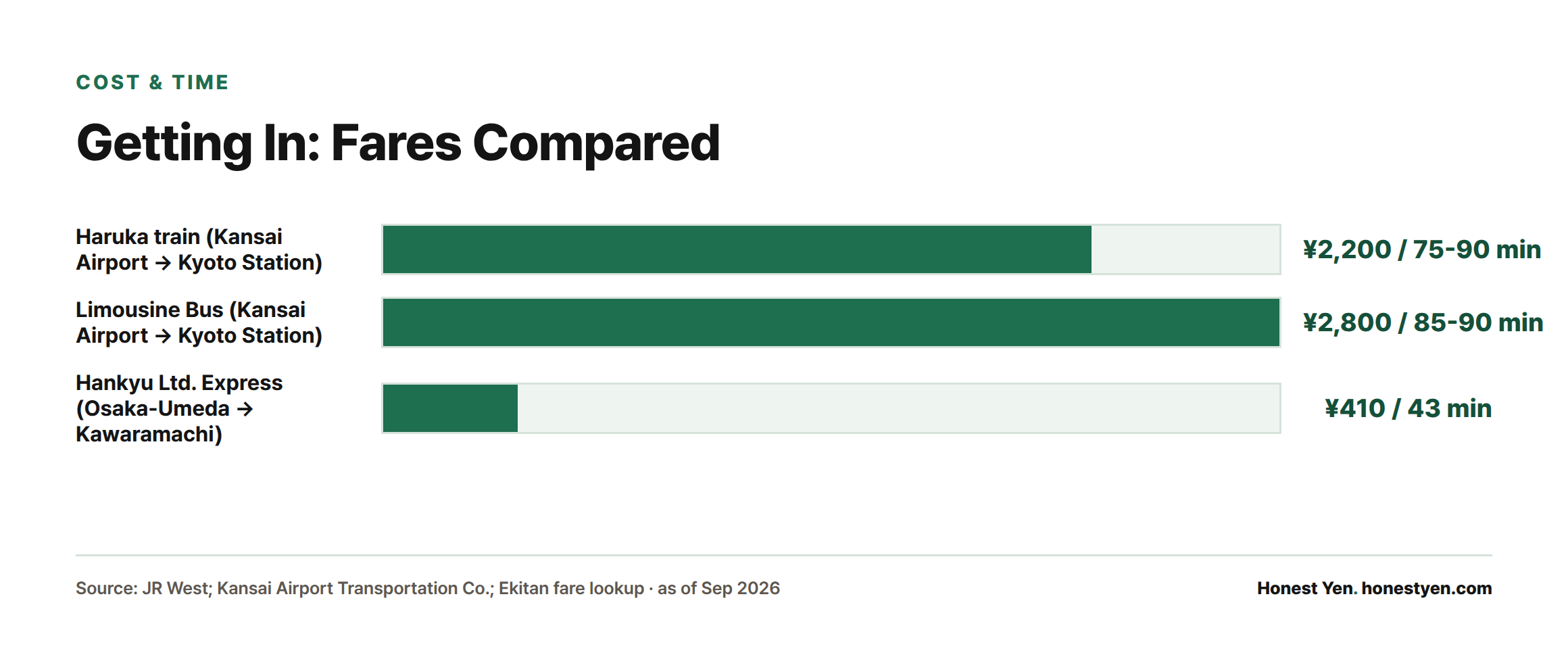
Coming from Osaka’s Umeda district, the Hankyu Kyoto Line limited express runs from Osaka-Umeda straight to Kyoto-Kawaramachi in 43 minutes, no transfer[4], for a one-way fare of around ¥410[5] — the fare figure comes from a fare-lookup aggregator rather than Hankyu’s own site, since Hankyu’s official calculator requires an interactive date selection rather than a static route price. That makes Kawaramachi the faster, cheaper one-seat ride for anyone flying in and out through Osaka’s Umeda side rather than Kansai Airport, which is worth weighing against a multi-day rail pass if you’re moving between Osaka and Kyoto more than once.
Which area fits your trip
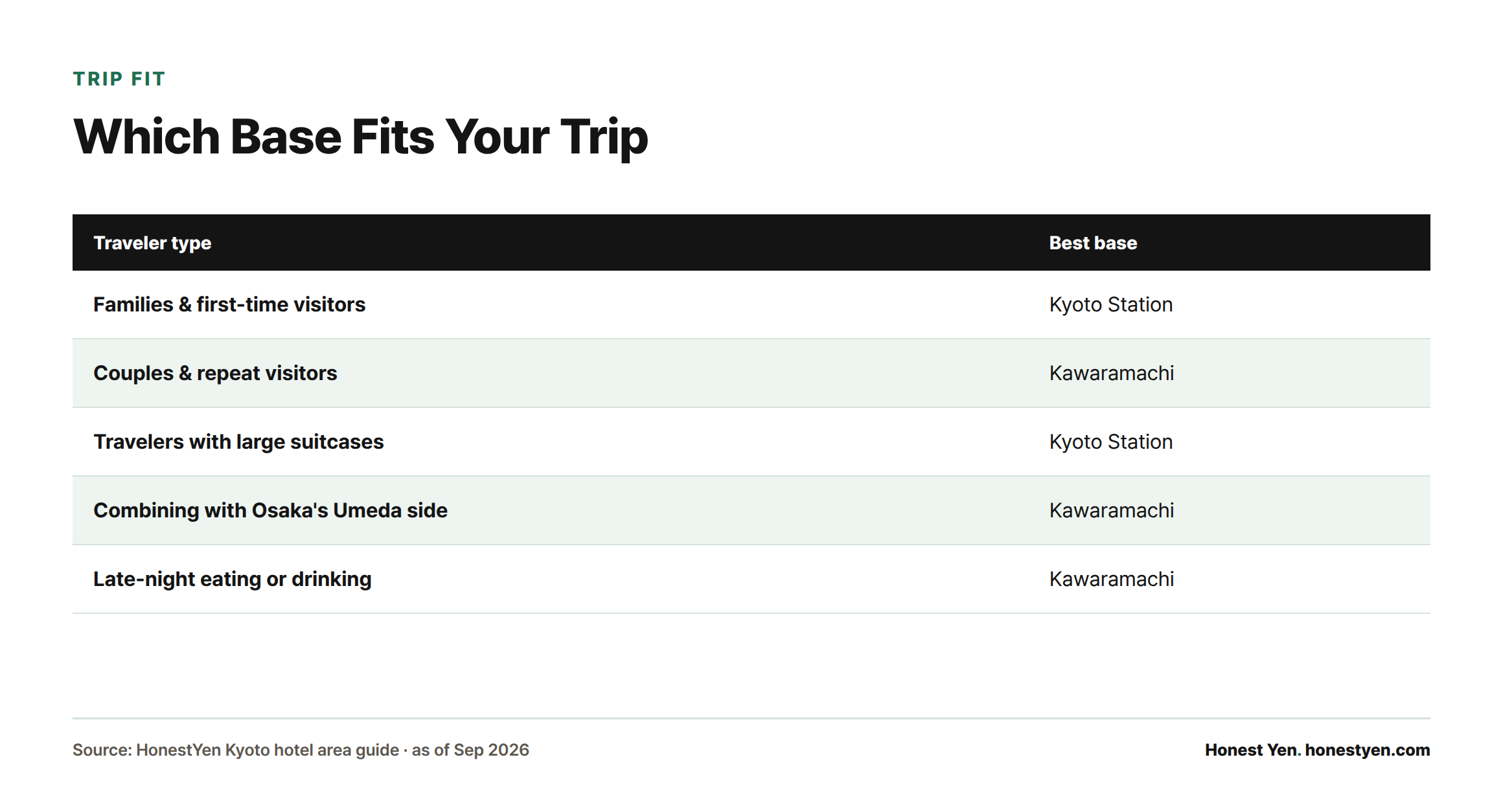
- Families and first-time visitors: Kyoto Station, for the direct airport connection and the bus terminal that reaches temples without transfers.
- Couples and repeat visitors: Kawaramachi, for the walkable dining, nightlife, and proximity to Gion.
- Travelers with large suitcases: Kyoto Station is the clear winner. The Haruka and the Limousine Bus are both one-seat rides with under-floor luggage storage; reaching Kawaramachi from the airport means dragging bags through at least one transfer.
- Combining Kyoto with Osaka’s Umeda side: Kawaramachi, given the direct 43-minute Hankyu run.
- Late-night eating or drinking: Kawaramachi. Kiyamachi and Pontocho’s bars and izakaya routinely stay open well past midnight, while the area around Kyoto Station quiets down once the station’s own restaurants close, leaving mostly convenience stores.
Seasonal price swings and booking timing
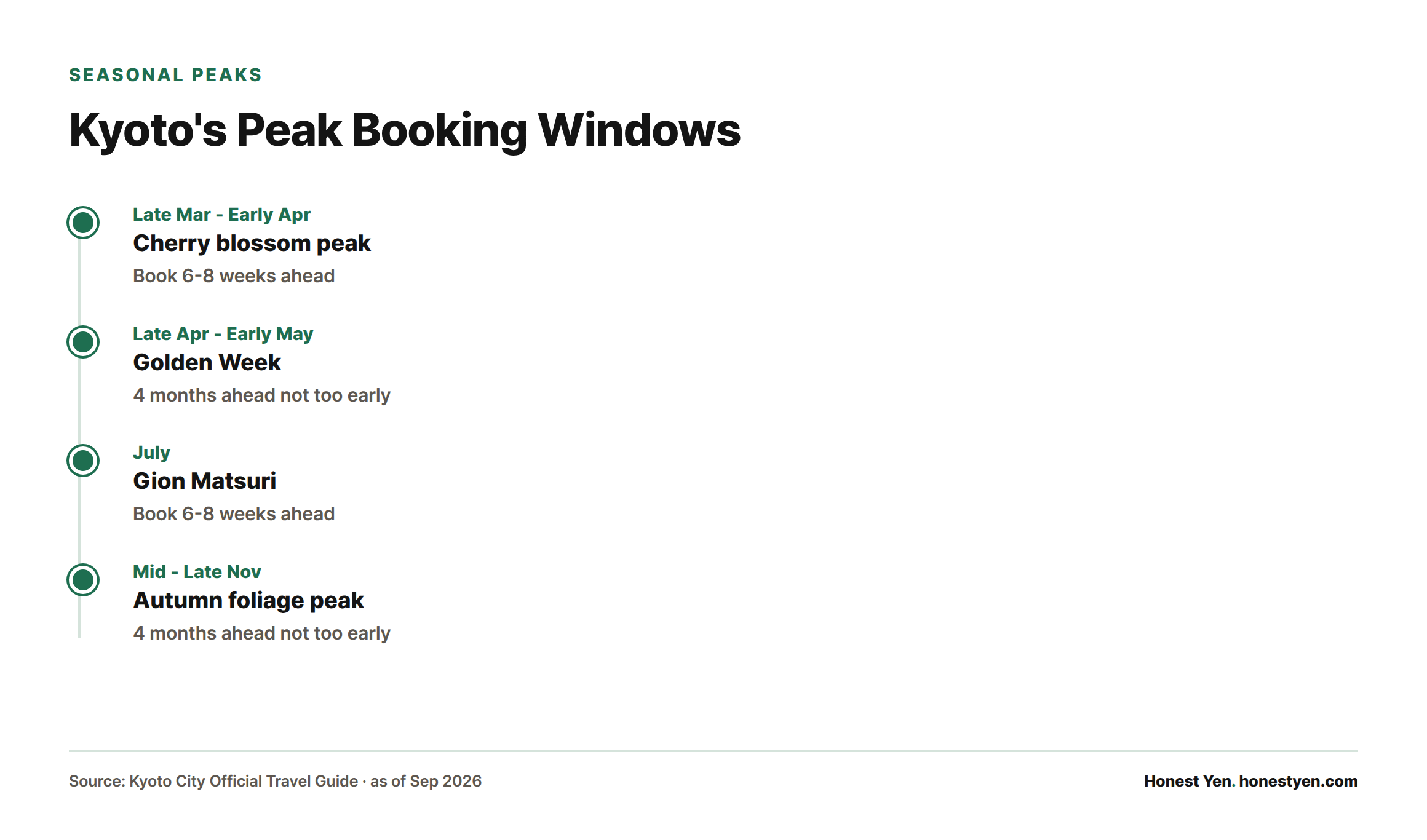
Kyoto’s cherry blossoms typically peak in late March to early April, and autumn foliage typically peaks from mid to late November, according to the city’s official tourism site[6][7] — if you’re mapping bloom dates against a trip, the Kyoto Cherry Blossoms bloom forecast tracks that year to year. Both windows, plus Golden Week (late April-early May) and the Gion Matsuri in July, are when Kyoto hotel rates climb hardest and rooms disappear first. Small boutique and luxury properties around Kawaramachi tend to sell out earliest given their limited room counts, while the larger chain hotels clustered around Kyoto Station generally hold inventory a little longer simply because there are more rooms to fill. Booking six to eight weeks ahead of these windows is common guidance from Kyoto hotels; for Golden Week and the November foliage peak, four months out is not too early for either area.
Where to actually stay
Kawaramachi: The Ritz-Carlton Kyoto sits on the Kamo River near Nijo-Ohashi bridge, an easy walk to Kawaramachi, Pontocho, and Gion. Mitsui Garden Hotel Kyoto Kawaramachi Jokyoji is about a minute on foot from Kyoto-Kawaramachi Station, a mid-range option in the middle of the district. APA Hotel Kyoto Gion Excellent, roughly a 10-minute walk from Kawaramachi Station toward Gion, covers the budget end.
Kyoto Station area: Hotel Granvia Kyoto is built into the station itself. Dormy Inn Premium Kyoto Ekimae, three minutes’ walk from the north central exit, adds a natural hot-spring bath. APA Hotel Kyoto Ekimae, about five minutes from the central gate, is the budget-chain option.
Bottom line
If your priority is walking out the door into restaurants, bars, and the Gion streetscape, Kawaramachi wins. If your priority is getting from the airport to your room and out to temples with minimal transfers — especially with kids, jet lag, or oversized luggage — Kyoto Station wins. Many multi-night visitors split the difference: a night or two near the station on arrival and departure days, and the rest of the stay in Kawaramachi.
Sources
- West Japan Railway Company, Haruka limited express operating information
- West Japan Railway Company, HARUKA One-way Ticket Information
- Kansai Airport Transportation Co., Ltd., Limousine Bus Kyoto Route timetable and fares
- Hankyu Railway, Osaka-Umeda to Kyoto-Kawaramachi limited express timetable
- Ekitan, Osaka-Umeda (Hankyu) to Kyoto-Kawaramachi fare lookup
- Kyoto City Official Travel Guide, cherry blossom viewing information
- Kyoto City Official Travel Guide, autumn foliage viewing information