Takuhaibin: What Hotel Luggage Forwarding Costs in Japan
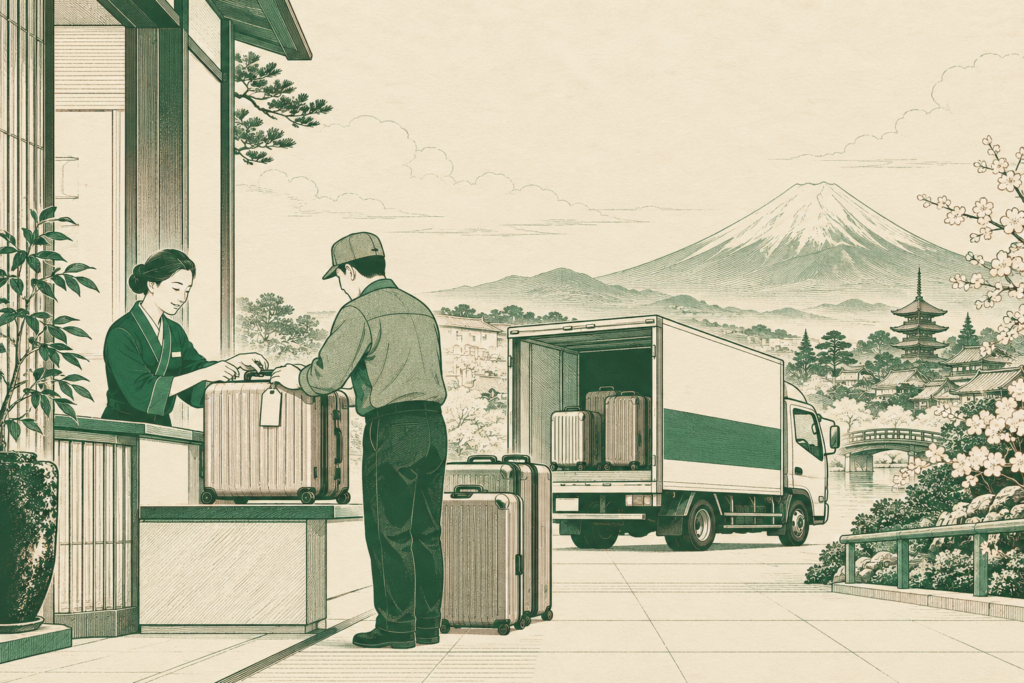
Forwarding a suitcase between hotels in Japan by takuhaibin costs a few thousand yen a bag and takes until the next morning to arrive. Same-day delivery exists on a handful of airport routes, but it comes with a hard cutoff and a size limit. The prices below are the carriers’ own rate tables, current as of September 2026.
Before you start
- The receiving hotel’s exact name, address and your check-in date, to write on the waybill.
- Cash in yen, since not every counter takes a card.
- Any tax-free purchases taken out of the suitcase and shown to customs first.
- A firm cutoff time in mind, not just the counter’s opening hours.
How hotel-to-hotel takuhaibin works, step by step
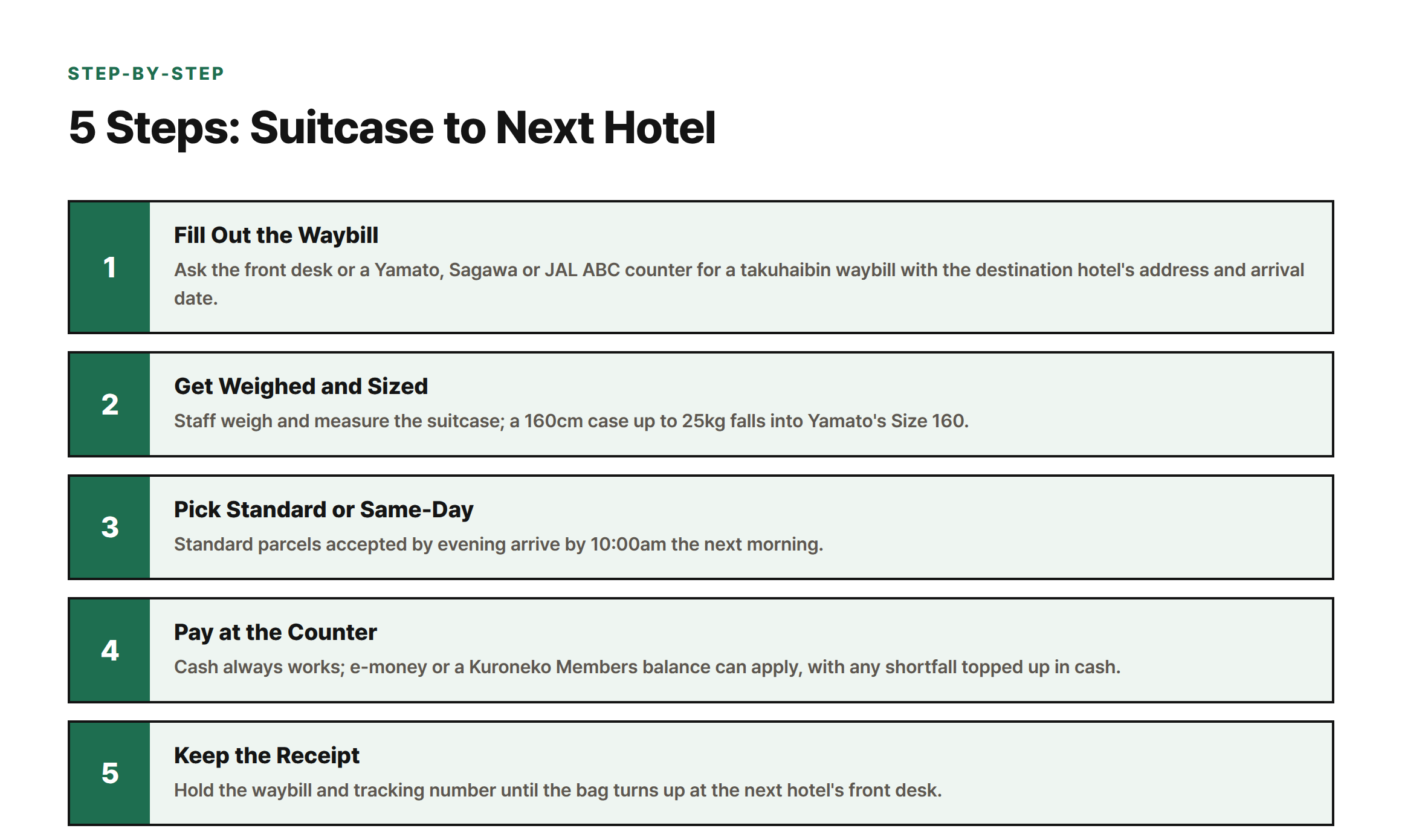
- Ask the front desk, or a Yamato, Sagawa or JAL ABC counter, for a takuhaibin waybill and fill in the destination hotel’s address and your arrival date.
- Staff weigh and measure the suitcase to assign a size band; a 160 cm case up to 25 kg sits in Yamato’s Size 160[1].
- Choose standard or same-day service. Standard parcels accepted by evening arrive by 10:00am the next morning[2].
- Pay at the counter. Cash always works; an e-money or Kuroneko Members balance can apply, with any shortfall topped up in cash[3].
- Keep the waybill receipt and its tracking number until the bag turns up at the next hotel’s front desk.
Cutoff times decide whether the bag beats you there
Standard hotel-to-hotel takuhaibin runs next-day only, but some companies offer same-day delivery if the bag is dropped off before 11am, depending on distance[4].
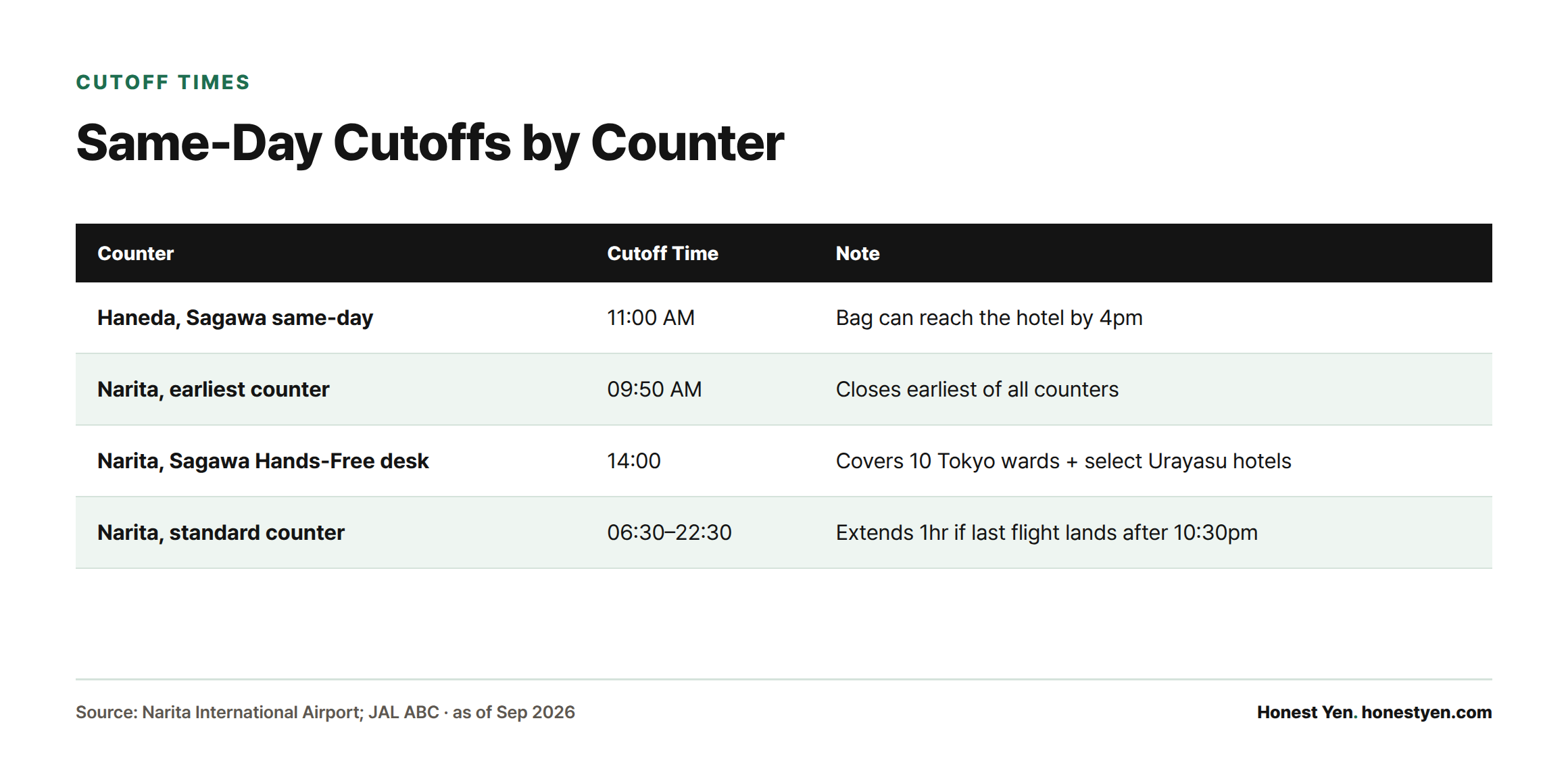
At Haneda, Sagawa’s same-day service can have a bag at the hotel by 4pm if it goes in by 11am[4].
At Narita, same-day acceptance windows vary by counter and terminal. They close as early as 09:50 AM at one counter and as late as 14:00 at Sagawa’s Hands-Free desk[5]. That desk only covers 10 wards in Tokyo and selected hotels in Urayasu City[5].
Standard counters run far longer: one Narita counter posts 06:30 to 22:30, extending an hour if the last flight of the day lands after 10:30pm[5].
The same counters accept bags heading to a flight home. Travelers on an early international departure should arrange pickup in advance, since retrieving a bag between 6:00 a.m. and 7:00 a.m. needs prior contact with the courier[5].
Which counters actually take the bag
Hotel front desks handle standard takuhaibin drop-off and pickup as a routine service, alongside dedicated counters at Narita[5]. Convenience stores take most sizes, though some refuse parcels larger than Size 180[1].
Haneda’s JAL ABC counter runs a separate same-day hotel-delivery program, but it only applies at some hotels, not the whole city[6].
A coin locker or a same-day storage counter costs less than forwarding when the trip is only a few hours long. See our luggage storage cost guide for exact locker prices.
What it actually costs
The table uses Sagawa’s Kanto-origin rate table and JAL ABC’s Haneda fee, both current as of September 2026.
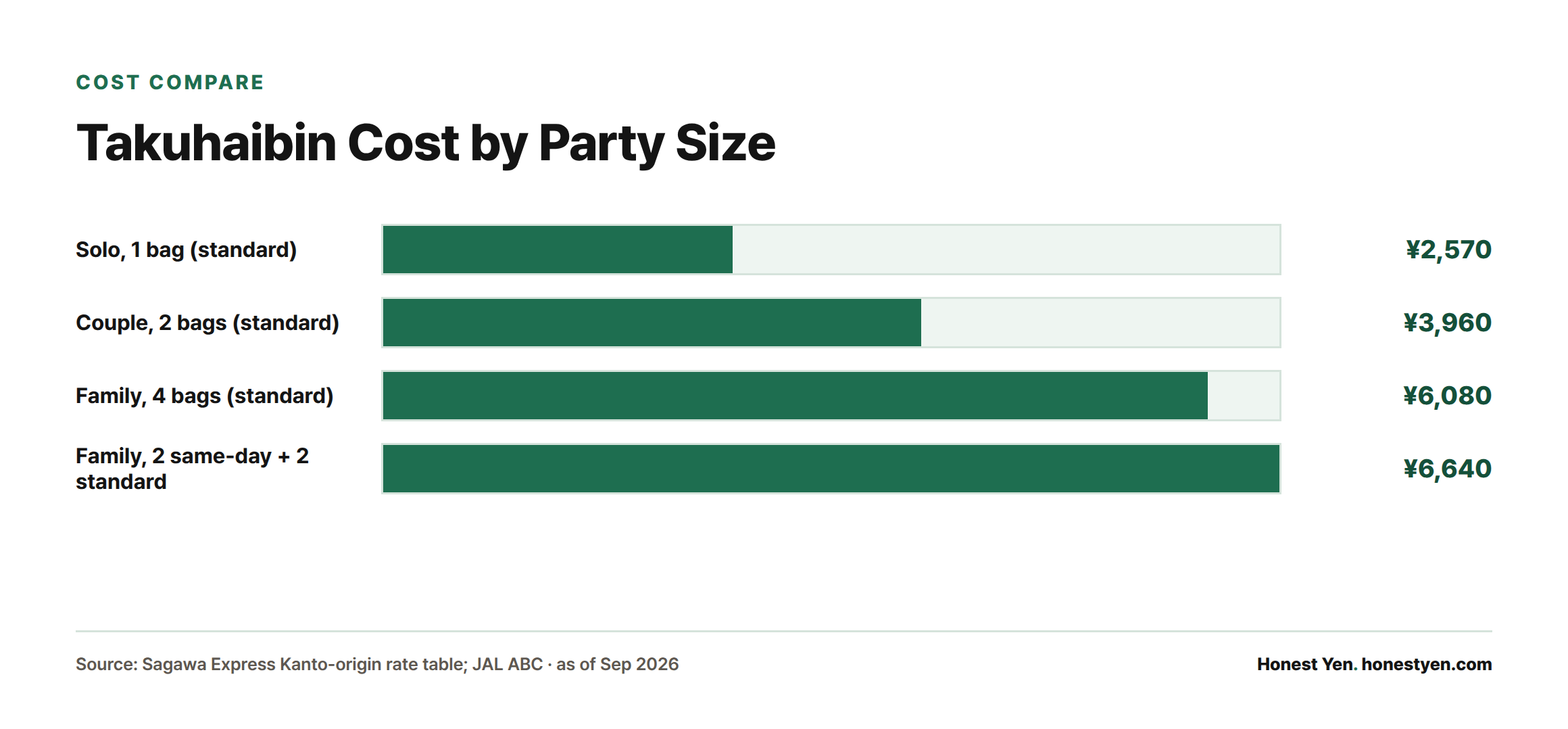
| Solo: Tokyo hotel to Kyoto hotel (1 bag, Size 160) | Couple: Narita Airport to Shinjuku hotel (2 bags, Size 100 + Size 160) | Family of four: Haneda to a Tokyo Bay hotel (4 bags, Size 100 each) | |
|---|---|---|---|
| Standard next-day rate | ¥2,570[7] | ¥1,520[7] + ¥2,440[7] | ¥1,520[7] per bag |
| Same-day rate (JAL ABC, 13:00 cutoff) | not offered on this route | not offered on this route | ¥1,800[6] per bag |
| Total, all bags standard next-day | ¥2,570 | ¥3,960 | ¥6,080 |
| Total, two bags same-day plus two standard | — | — | ¥6,640 |
For the family, two bags same-day plus two standard works out to ¥1,800 × 2 + ¥1,520 × 2 = ¥6,640. That is ¥560 more than sending all four bags standard next-day.
¥560 across four bags buys same-day delivery on two of them. That’s worth paying only if the hotel is on JAL ABC’s Haneda list and the 13:00 cutoff is still open[6].
Dropping the parcel off in person instead of requesting a pickup saves ¥100 at a sales office, agency or convenience store. Kuroneko Members save another ¥50 by issuing the waybill on a NekoPit terminal[1].
What you can’t send, and how to pack
Cash, cheques and securities cannot go by takuhaibin, nor can passports or other hard-to-replace documents[8].
Parcels worth more than ¥300,000 and flammable items such as kerosene or gas cylinders are also refused at the counter[8].
As of September 2026, duty-free purchases must stay in their sealed bag until a customs officer checks them against the passport at departure[9]. That rule ends on November 1, 2026[9].
That means anything bought tax-free needs to clear customs and come out of its sealed bag before the suitcase goes into takuhaibin, not after.
Where people get stuck
Missing the cutoff by minutes. A bag dropped off after the same-day window closes waits for the next slot, with no partial credit for being close[5].
Paying by card at a cash-only counter. Some airport counters take only cash in yen, with cards accepted solely at international terminal desks[6].
Guessing the size band. A 160 cm case checked in as Size 140 gets re-measured and re-priced at the counter, not after[1].
Sending an oversized bag to a convenience store. Some stores will not take parcels above Size 180, so a large case needs a sales office or hotel desk instead[1].
Packing tax-free goods before customs has seen them. The suitcase then has to be reopened at the counter to take them back out[9].
Sources
- Yamato Transport, TA-Q-BIN nationwide rate table
- Yamato Transport, TA-Q-BIN Time Service
- Yamato Transport, TA-Q-BIN payment and discounts
- Japan National Tourism Organization, Travel around Japan luggage-free
- Narita International Airport, Baggage delivery service
- JAL ABC, Hotel baggage delivery from Haneda Airport
- Sagawa Express, Kanto-origin rate table
- Yamato Transport, Dangerous and prohibited items
- Japan Travel (JNTO), Japan’s new tax-free shopping system